,
Comprehensive implementation of the Xway platform in the transport and logistics sector – case study
Customer profile in nationwide logistics with high security requirements
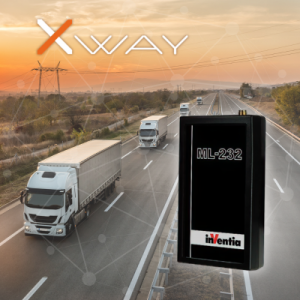
For the purposes of this case study, a model customer was adopted – a nationwide distributor of sensitive goods, serving the food, pharmaceutical and selected chemical industries. The company provides transport services in a mixed model, using both its own fleet and the services of several external forwarding companies.
Every day, dozens of vehicles equipped with refrigerated and isothermal trailers set off on their routes. The high unit value of the goods and the restrictive requirements for transport conditions make continuous monitoring of the load a key element of the company’s operations.
Find out more:
-
Customer profile in national logistics with high security requirements
-
Starting point of the project in a distributed supply chain
-
Implementation objectives focused on centralised monitoring and risk reduction
-
One platform, many functions – implementation of the Xway system
-
Permitted zones and cargo monitoring
-
Reporting and data analysis for transport optimisation
-
Implementation organisation and ongoing operational support
-
Implementation results translating into real business benefits
Starting point of the project in a distributed supply chain
Before implementing the Xway system, the client faced many problems typical of a distributed logistics chain:
- lack of a uniform system for monitoring the entire fleet and multiple carriers,
- limited insight into the actual conditions inside the semi-trailers during transport,
- difficulties in detecting unauthorised stops and door openings,
- no possibility of unambiguous verification that loading and unloading took place only at designated locations,
- time-consuming analysis of complaints and incidents, based mainly on carriers’ statements.
The scale of the business meant that even single incidents – theft of part of the cargo or exceeding the permissible temperature – generated significant financial and reputational losses.
The implementation objectives focused on centralised supervision and risk reduction
The aim of the implementation was to create a centralised transport supervision system that would ensure full transparency of logistics processes, regardless of the number of vehicles and external entities involved.
The client expected a solution that would enable:
- real-time monitoring of the location of vehicles and trailers,
- continuous recording of the temperature in the cargo space,
- effective supervision of the condition of cargo doors,
- determination of zones permitted for loading and unloading,
- automatic alerts in the event of violations or exceedances,
- access to transparent reports and historical summaries,
- user permission gradation,
- integration with its own user authentication system and Business Intelligence software.
One platform, many functions – implementation of Xway
The answer to the above needs was the Xway platform – a system designed for transport monitoring, cargo security and environmental control.
As part of the implementation, the vehicles were equipped with devices enabling:
- constant communication in the LTE standard with interference detection and data protection even in the event of a communication failure,
- real-time GPS/GNSS monitoring, including archiving of routes and stops, with support for signal interference detection, spoofing attempts and technology supporting
- geolocation in areas with limited coverage (Dead Reckoning),
- continuous temperature measurement inside the trailer, with data recording for control and audit purposes,
- door status monitoring, enabling the recording of each opening and closing based on advanced technologies that surpass popular solutions such as ‘electronic customs seals’ in terms of security,
- integration with Bluetooth Low Energy wireless sensors, allowing freedom of choice in terms of sensor installation location in the trailer and their number (measurement redundancy).
Data from the devices is sent to the Xway platform, where users have access to current information and event history from a single, central panel. The measuring sensors can be calibrated by an accredited laboratory in accordance with ISO 17025, both for temperature and humidity.

Permitted zones and loading supervision
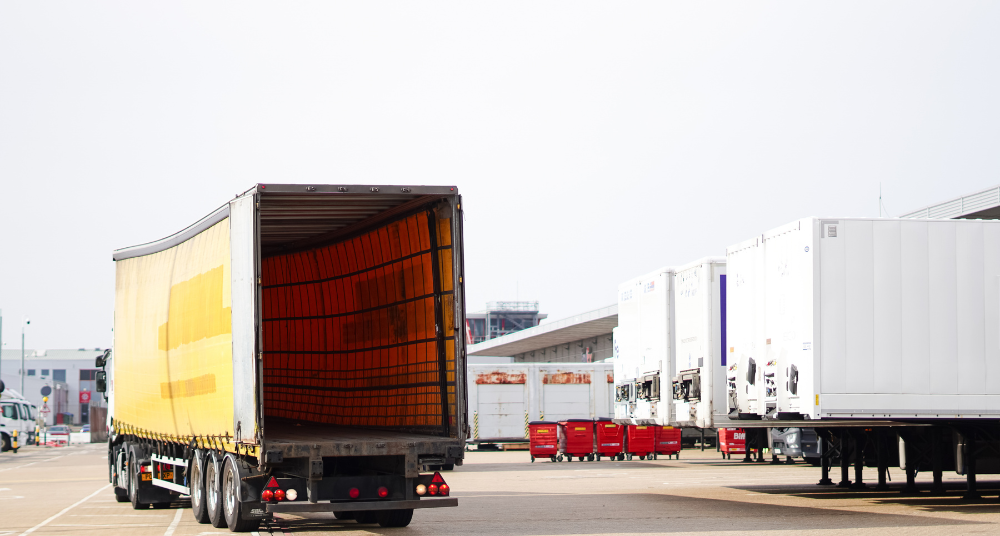
An important element of the implementation was the geofencing function, which allows the definition of permitted loading and unloading areas, such as central warehouses, distribution centres or collection points at end customers.
The Xway system automatically verifies:
- the location of the vehicle,
- the moment the loading area is opened,
- the compliance of the event with the assigned zone.
Any door opening outside the permitted zone is treated as a potential security breach and results in:
- an immediate alarm in the system,
- recording of the event in a dedicated report,
- the possibility of a quick response by the operator or security department.
Reporting and data analysis for transport optimisation
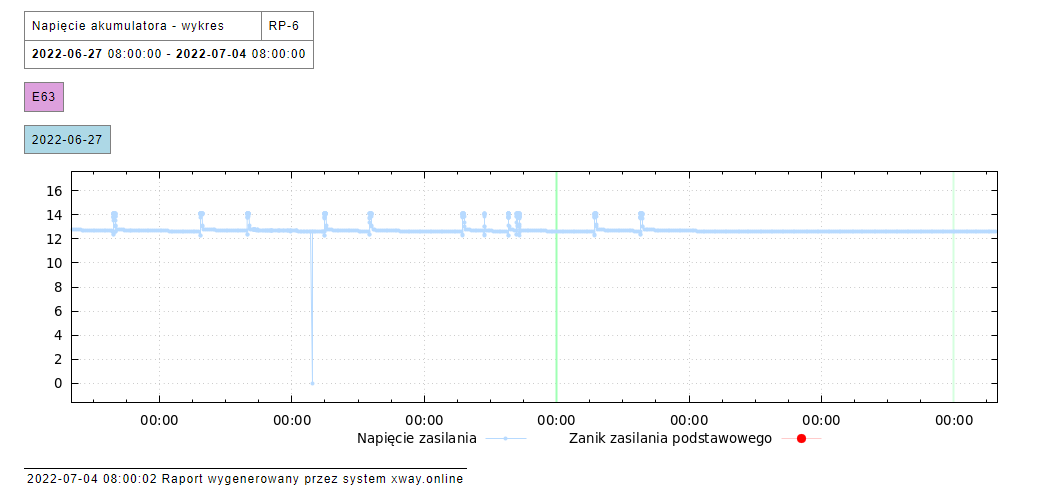
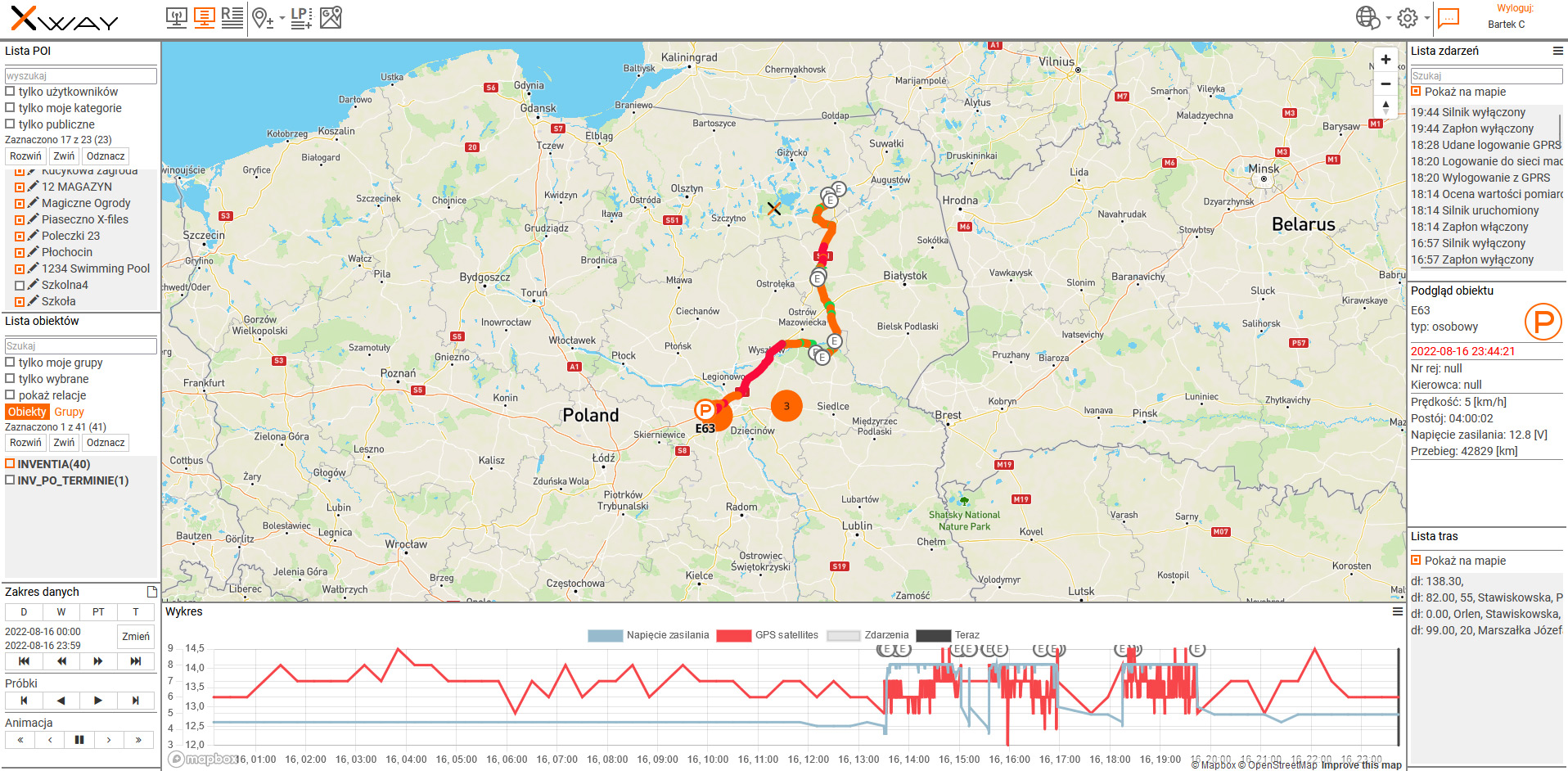
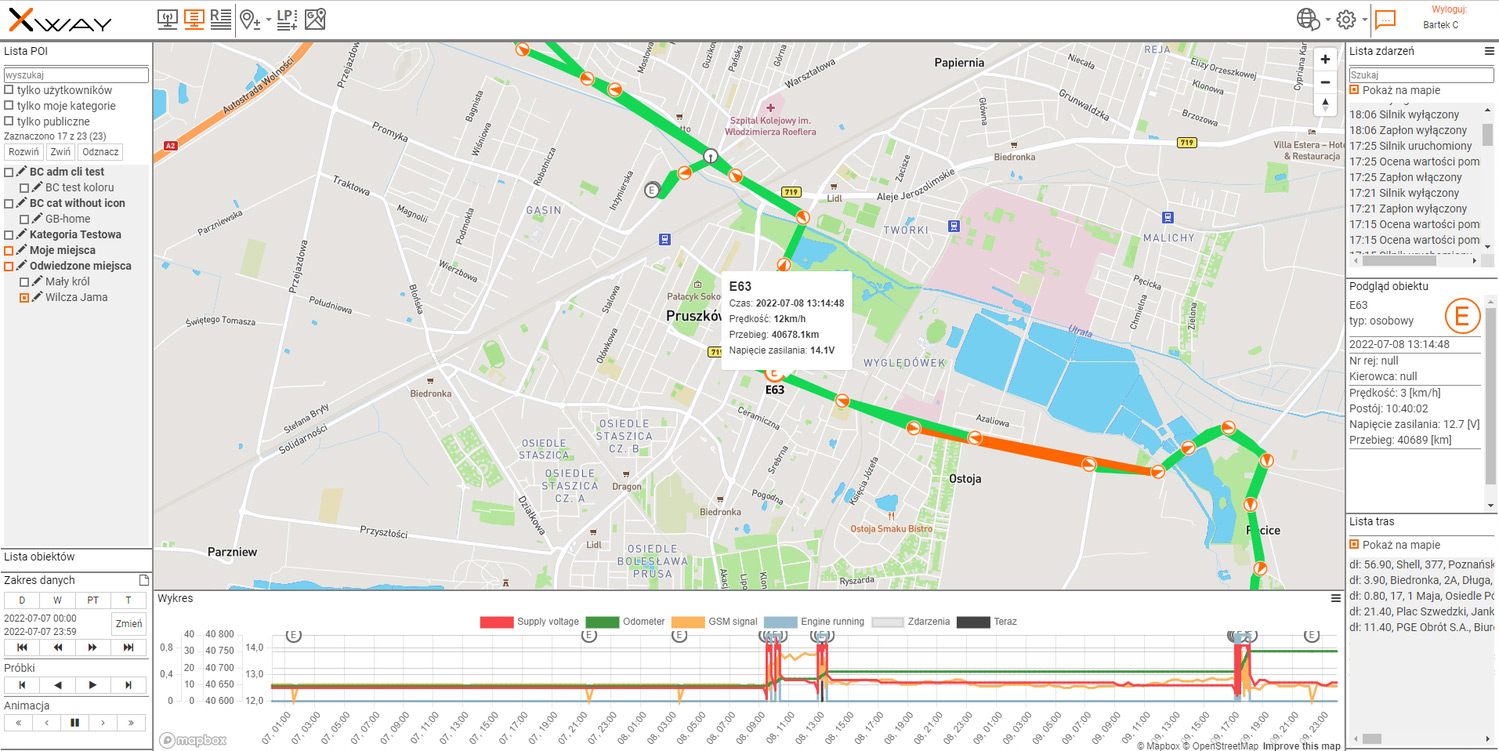
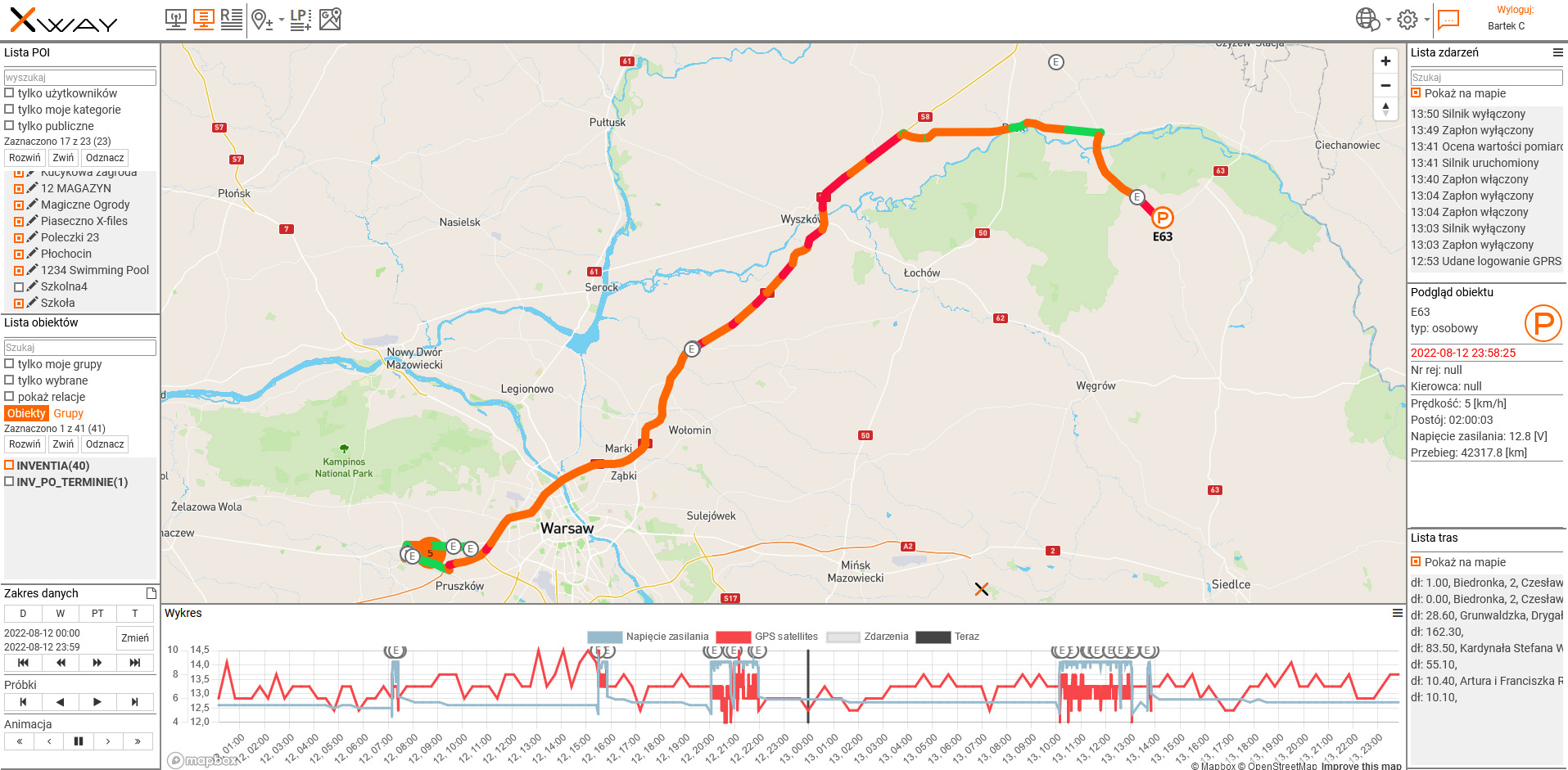
The Xway platform provides a set of reports for detailed analysis of the transport process. Reports include, among others: route and stop history, temperature summaries for a selected period, door opening reports with location, and a list of alarms and violations assigned to specific vehicles or carriers.
This provides the customer with a tool that not only allows them to respond to events in real time, but also to optimise logistics processes based on historical data.
Implementation organisation and ongoing operational support
The project was implemented by the manufacturer of the Xway system, based on an authorised network of installers and service technicians. Full control was ensured at every stage:
- installation of devices in vehicles and trailers,
- system commissioning and testing,
- configuration of alarms, temperature thresholds and zones,
- training of users on the customer’s side,
- ongoing handling of service requests during operation.
This approach guaranteed high-quality implementation and stable system operation in everyday use.
Implementation results translating into real business benefits
After launching the Xway system, the customer noted a number of measurable benefits:
- significant reduction in theft and unauthorised interference with cargo,
- reduction in goods losses resulting from temperature exceedances and breaks in the cold chain,
- full transparency of transport processes, regardless of the carrier,
- shorter complaint and incident analysis times,
- increased control over transport partners,
- improved end customer service quality.
The implementation of the Xway system has enabled the effective combination of location monitoring, transport condition control and cargo security supervision in a single, coherent solution. The platform has become a key element of the customer’s logistics infrastructure, providing real support in terms of risk reduction, goods protection and delivery quality improvement.
Questions and answers – Implementation of Xway in transport and logistics
1. What operational and financial risks in the transport of sensitive goods most often remain invisible without a central monitoring system?
In a distributed logistics model, involving a proprietary fleet and multiple external carriers, the biggest problem is the lack of a single source of data. Information about the route, stops, temperature or door openings is incomplete, delayed or based solely on driver declarations.
In practice, this means it is difficult to detect:
- unauthorised stops,
- opening of the cargo space outside designated points,
- short-term but critical temperature exceedances,
- attempts to jam or spoof the location signal.
With large-scale operations, even a single incident can mean a financial loss of tens or hundreds of thousands of pounds and the risk of reputational damage. The lack of a centralised surveillance system means that the company only reacts after the fact – often when the damage has already been done.
2. How do the geofencing and door opening monitoring functions in the Xway platform actually reduce theft and unauthorised interference with cargo?
The Xway platform combines location data with information about the status of the cargo space doors, creating a coherent event control mechanism. Geofencing plays a key role here – the ability to define permitted loading and unloading zones.
The system automatically verifies:
- whether the vehicle is in an approved location,
- whether the door opening time is in accordance with the schedule and the assigned zone.
Any door opening outside the designated area generates an immediate alarm and records the event in the system. The operator can take action in real time – contact the driver, carrier or security department.
This model of operation has a preventive effect. The awareness of constant supervision significantly reduces the scale of abuse, and in the event of an incident, the company has clear data – location, time and history of events.
3. Why are continuous temperature recording and data archiving crucial in the food and pharmaceutical sectors?
In the transport of food and pharmaceutical products, it is crucial to maintain an unbroken cold chain. Even a short-term exceedance of the permissible temperature can result in the loss of shelf life, the need for disposal or withdrawal from the market.
Continuous temperature measurement in the trailer, with data archiving in the system, ensures:
- ongoing monitoring of transport conditions,
- automatic alerts in case of exceedances,
- access to the full measurement history for audits and inspections.
In addition, the possibility of calibrating sensors in an accredited laboratory in accordance with ISO 17025 increases the reliability of the data. In practice, this means not only greater product safety, but also a strong argument in relations with business partners and control institutions.
4. How does access to historical reports and integration with Business Intelligence systems optimise logistics processes?
One of the greatest values of the Xway platform is the transformation of raw operational data into real decision support.
Thanks to reports covering:
- route and stop history,
- temperature summaries,
- door opening reports,
- alarm and violation lists,
the company can analyse the repeatability of events, identify weak points in the supply chain and assess the quality of work of individual carriers.
Integration with Business Intelligence systems allows transport data to be combined with financial and operational information. As a result, it becomes possible to:
- accurately estimate the costs of incidents,
- assess the profitability of routes,
- optimise schedules,
- build measurable KPIs for logistics partners.
The system ceases to be merely a control tool and becomes an element of strategic logistics management.
Shere this article:



Read more articles:
ML-232 and xway.online – the new standard in vehicle monitoring and location security
See how ML‑232 and xway.online combine precise location with security and flexible monitoring

Inventia is delighted and proud to announce another milestone in its development – obtaining the prestigious ISO/IEC 27001 certification