
.
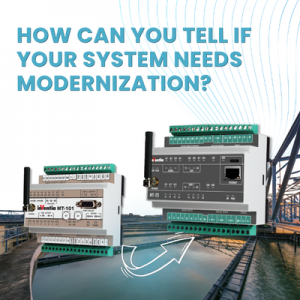
Telemetry also has its own life cycle. How can you tell when a water and sewerage system needs newer technology?
A telemetry system can operate correctly for many years. And that is precisely why it is easy to overlook the moment when solutions that have been tried and tested for a decade or two begin to fall short of modern requirements.
In the water and sewerage sector, this is particularly significant. Telemetry monitors dispersed facilities operating 24/7 – pumping stations, sewage pumping stations, water treatment works, reservoirs and measuring points across the network. Just because a system is working today does not necessarily mean it is ready for the years ahead.
Therefore, rather than simply asking “when to switch from 2G to 4G?”, it is worth taking a broader view: which elements of the infrastructure are beginning to create a technological debt?
Find out:
-
First warning sign: the system relies on a technology whose role is gradually diminishing
-
Second warning sign: over the years, not only has the equipment changed, but so too has its role
-
Third sign: the problem rarely concerns just one component
-
Fourth sign: we treat security as a function of a single product
-
Before asking ‘how should we upgrade?’, it is worth answering: ‘what do we have?
-
The most common questions about modernising telemetry systems
First sign: the system relies on a technology whose role is gradually diminishing
For years, 2G/GPRS was one of the cornerstones of professional telemetry systems. It allowed small amounts of data to be efficiently transmitted from many dispersed sites to a master system. However, mobile networks also have their own life cycle. The development of 4G and 5G is causing operators to gradually shift their resources towards newer standards.
In telemetry, however, it is not about internet speed. What is far more important is long-term availability and continuity of communication. A lack of data from a site may mean a lack of information about a pump failure, a power cut, a change in pressure or an alarm level being exceeded.
That is why it is worth knowing today which system components rely exclusively on older communication technology.

Second sign: over the years, not only has the device changed, but so has its role
The generational change in telemetry devices is no longer simply a matter of replacing one modem with another.
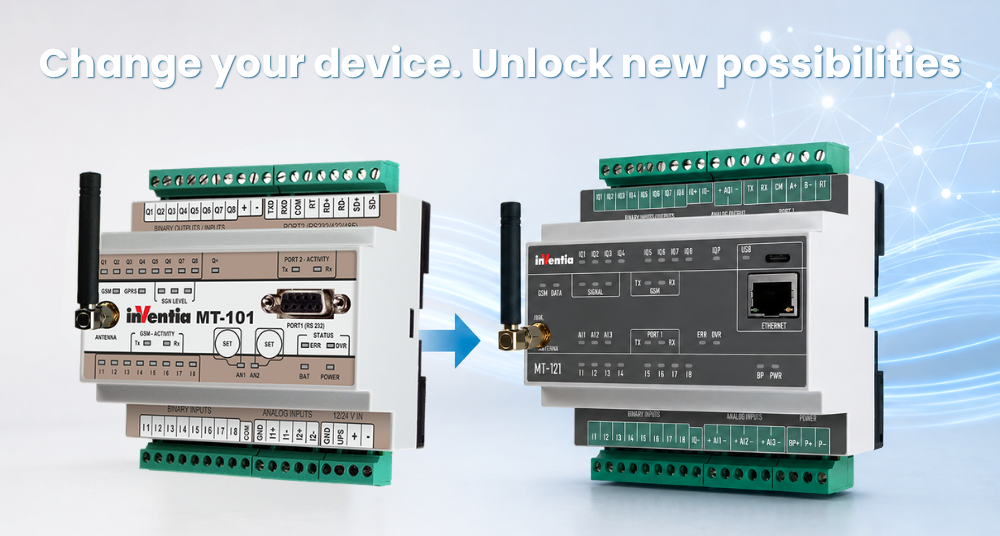
A good example is the MT-121 telemetry controller – the successor to the MT-101 module, which has been highly regarded for its long-standing reliability. In addition to 2G/4G communication, it combines the functionality of a PLC, a data logger, a protocol converter and a communication interface. The CODESYS® environment, on the other hand, allows applications to be developed using standard automation languages.
This illustrates a broader shift: a modern telemetry device is becoming part of a more flexible automation and communications environment, rather than merely a point for transmitting data from a site.
Modernisation can therefore be an opportunity not only to replace transmission technology, but also to streamline the way in which the system will be developed and maintained in the years to come.
Third sign: the problem rarely concerns just one component
In telemetry systems, individual components are interdependent. Field devices, the method of data transmission, the communications infrastructure and the systems used for monitoring form a single environment.
Therefore, modernisation should not begin and end with the question: does the telemetry module need replacing?
It is equally important to check whether the remaining elements of the system still meet current technical, communication and security requirements. Infrastructure developed over many years often combines solutions from different technological generations. This need not be a problem in itself, but over time it may limit the possibility of further development, maintenance or the implementation of new functions.
It is therefore worth looking at the system as a whole and assessing, amongst other things, its readiness to work with newer communication technologies, its potential for further expansion, and the state of the environment in which the monitoring of facilities takes place.
Modernising a single component can serve as a catalyst for checking whether the entire system is prepared for the coming years of operation.
Fourth warning sign: we treat security as a feature of an individual product
The new generation of communication introduces more advanced security mechanisms than 2G. However, simply changing the transmission technology does not in itself guarantee a cyber-resilient system.
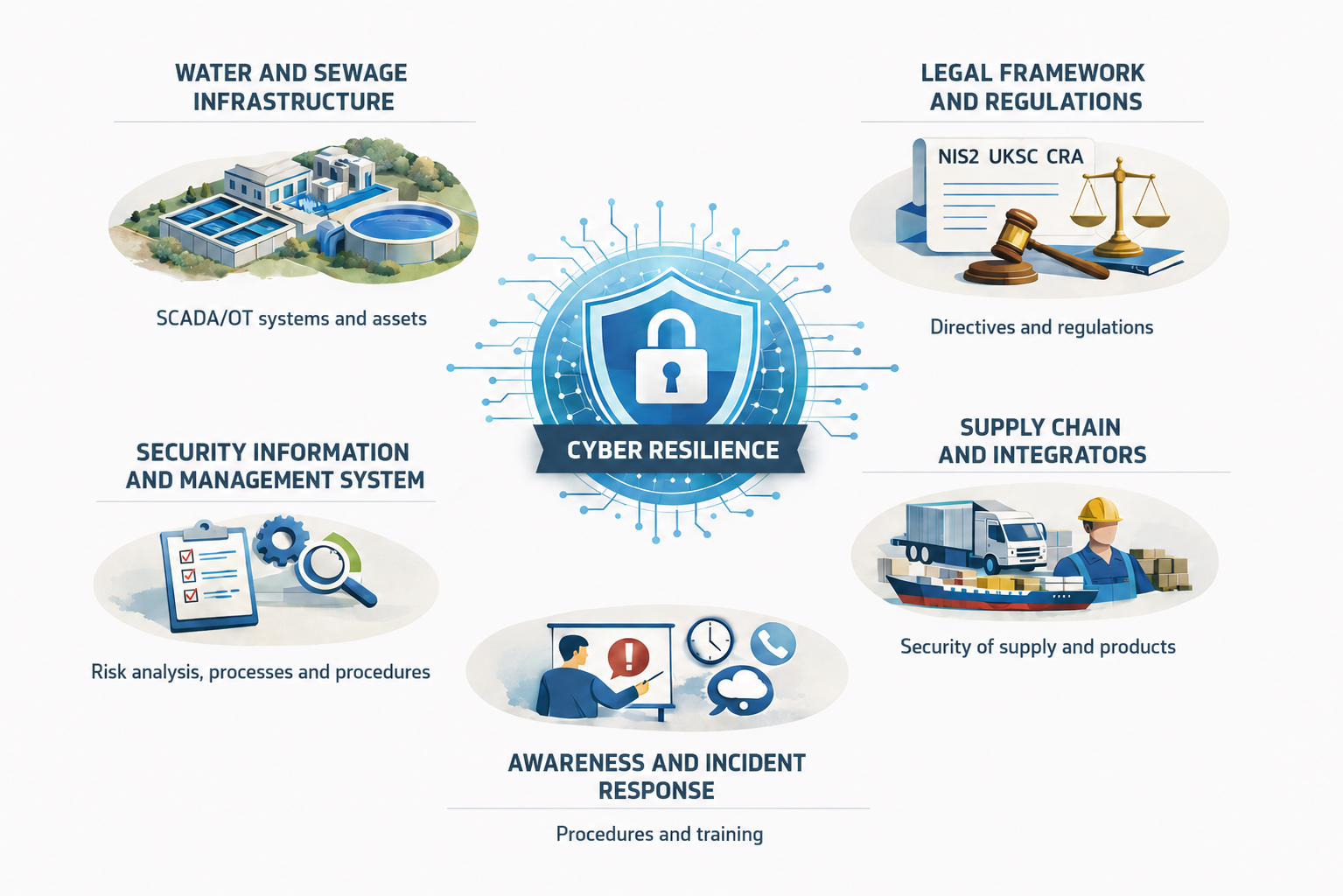
Telemetry cybersecurity must be built in layers – from field devices and transmission, through the communications infrastructure and servers, to SCADA, the IT/OT network, user access, updates
and backups. This is particularly important today, as OT systems are increasingly integrated with the IT environment, and access to data and applications can also be provided remotely.
Technological modernisation is therefore a good opportunity to also consider the resilience of the entire architecture.
Read also: Cyber resilience is a film, and you play the leading role, and SIM cards dedicated to telemetry (M2M, IoT, IIoT) – why is choosing them important?
Before the question arises: ‘How do we replace them?’, it is worth asking: ‘What do we have?
The best way to start modernisation does not necessarily have to be buying new equipment. It could be a thorough assessment of the current system:
- which devices and infrastructure components have a long service life ahead of them,
- which rely on older technologies,
- where communication limitations might arise,
- which elements of the master system require an upgrade,
- and does the current architecture meet today’s cybersecurity requirements?
Only after such an assessment does the next question arise: how to implement changes to a live system that cannot simply be taken offline whilst modernisation is underway?
And this is precisely the subject of the next article by Mr Maciej Sawicki from Control System – a long-standing Inventia Application Partner, holding the status of: Excellence Partner and Solutions Competence Centre, who will showcase the practical aspects of telemetry system transformation: the challenges encountered at real-world sites, how to organise the work, and solutions enabling modernisation to be carried out in stages without compromising the continuity of monitoring.
Because knowing that a system needs to change is one thing. Carrying out that change safely within an operational infrastructure is a completely different matter.
Frequently asked questions about the modernisation of telemetry systems - Q&A
How can you tell if a telemetry system needs upgrading?
Signs may include reliance on older communication technologies, limited scalability, difficulties in maintaining the infrastructure, or failure to meet current cybersecurity requirements. It is important to assess the entire system, not just individual devices.
Does modernising telemetry simply mean switching from 2G to 4G?
No. A change in transmission technology can be the catalyst for a broader modernisation. Modern telemetry devices can combine the functions of a communication module, a PLC, a data logger and a protocol converter, so it is also worth looking at how the entire system is managed and developed.
Where is the best place to start when modernising a water and sewerage system?
With a thorough assessment of the current infrastructure: field devices, communication methods, the master system, potential for further expansion, and the level of cybersecurity. Only on this basis can a secure, phased modernisation be planned without compromising the continuity of monitoring.
Share this article:



Read more articles:

Migration of telemetry systems. The evolution from MT-101 to MT-121
Find out what benefits switching to modern telemetry solutions offers
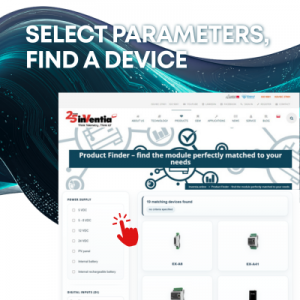
Which telemetry module should you choose? How to select an Inventia device to suit your project’s needs in just a few steps
Discover the product search tool on the Inventia website