
The challenges of GSM telemetry – how to ensure reliable remote monitoring?
The challenges of GSM telemetry – how to ensure reliable remote monitoring?
Today we’re taking a slightly different approach – we’re not writing about a product or a service, but about what really lies behind the operation of remote monitoring systems. We want to give you an insight into the challenges faced by GSM telemetry in day-to-day operations – from coverage issues to security and power supply concerns. This will allow you to view the subject from a different perspective and learn how reliable remote monitoring systems that operate 24/7 are built.
Find out:
-
GSM telemetry – the backbone of remote monitoring
-
2G, 4G, LTE-M or NB-IoT – which technology should you choose?
-
When the signal drops out – coverage as one of the biggest challenges
-
A stable connection isn’t everything; transmission quality is what counts
-
How can you reduce energy consumption and extend the operating time of your devices?
-
Data security – telemetry must not only be accessible but also protected
-
Hundreds of devices, one system – how to manage a large installation?
-
Keeping transmission costs under control
-
From pharmaceuticals to smart cities – where does GSM telemetry work in practice?
-
Reliable GSM telemetry is the result of many well-designed components
-
Would you like to use GSM telemetry in your business?
GSM telemetry – the backbone of remote monitoring
GSM telemetry is the backbone of modern remote monitoring systems. It enables data to be read from sensors, installations to be controlled and faults to be predicted – without the need to build costly cabling infrastructure. However, in practice, designing and maintaining reliable GSM telemetry involves a number of technical and organisational challenges. In this article, we will look at the most common problems and proven ways to solve them effectively.
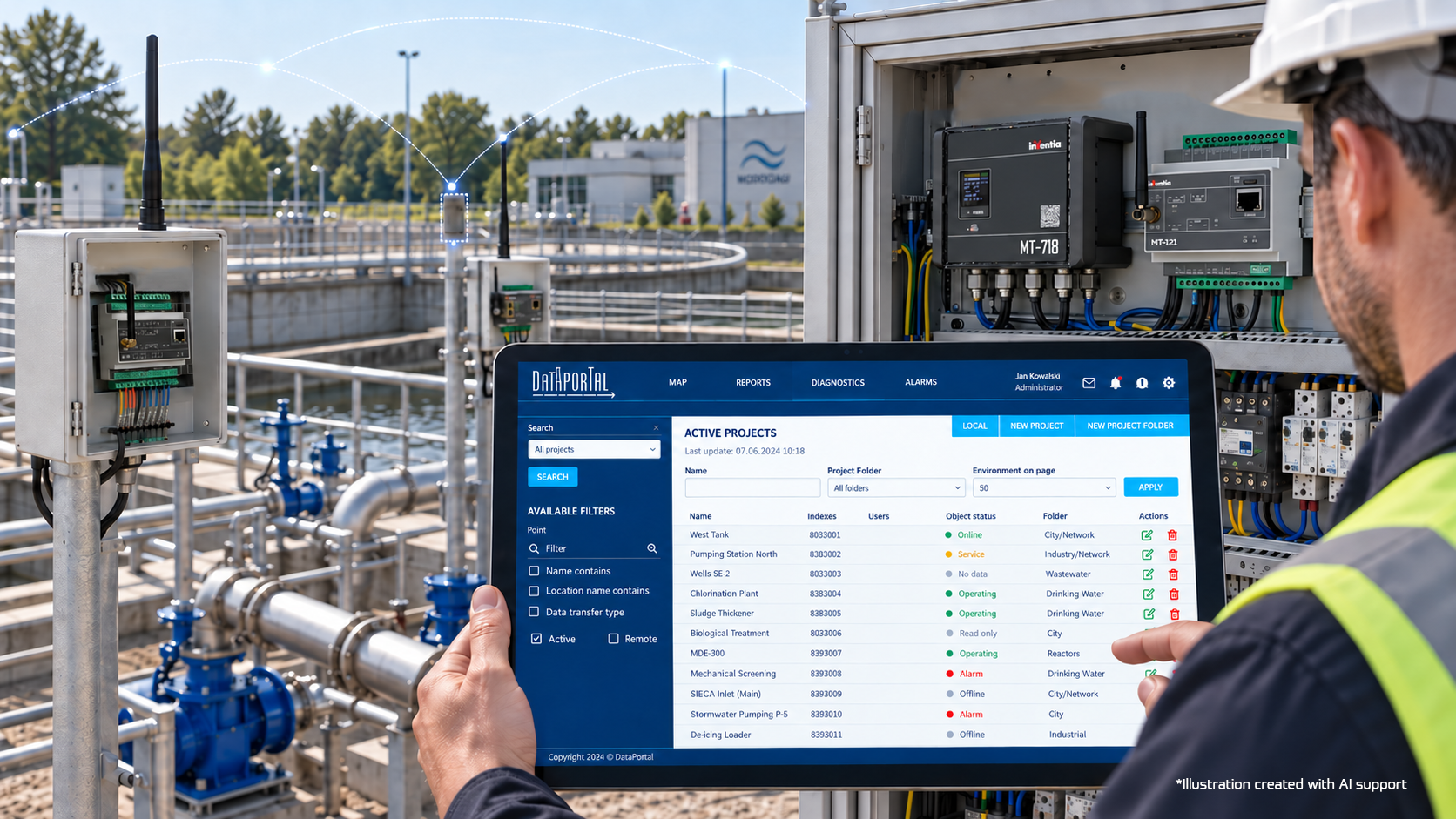
2G, 4G, LTE-M or NB-IoT – which technology to choose?
GSM telemetry is based on mobile networks – ranging from the older 2G and the recently phased-out 3G, to modern 4G, LTE-M and NB-IoT. Although GSM may seem outdated, it remains the most widely used technology in telemetry, particularly where simplicity, coverage and low costs are key. Each technology has its own advantages and limitations. The 2G network offers wide coverage at low cost, but has lower bandwidth and is less energy-efficient. 4G, on the other hand, provides fast data transmission and better stability, at the cost of higher energy consumption. LTE-M and NB-IoT are solutions optimised for the IoT, allowing devices to run on battery power for many years, albeit with limited bandwidth.
When the signal disappears – coverage as one of the biggest challenges
One of the biggest challenges of GSM telemetry is network coverage and availability. Not all locations have consistent signal coverage. In industrial, mountainous or forested areas, data transmission may be unstable or completely unavailable. Concrete halls, tunnels and metal structures further hinder communication. Coverage issues require the use of high-quality antennas, roaming support across multiple operators, and sometimes also the installation of repeaters or local base stations in critical locations.
A stable connection is not everything; transmission quality matters
Equally important is the quality of the transmission itself. Disturbances, signal attenuation or interference lead to packet loss and delays, which in telemetry – where response time is often critical – can result in erroneous readings or false alarms.
In such situations, the optimal placement of devices and antennas, along with the implementation of data retransmission and buffering mechanisms, proves helpful. It is also important to continuously monitor signal quality and automatically report any issues.
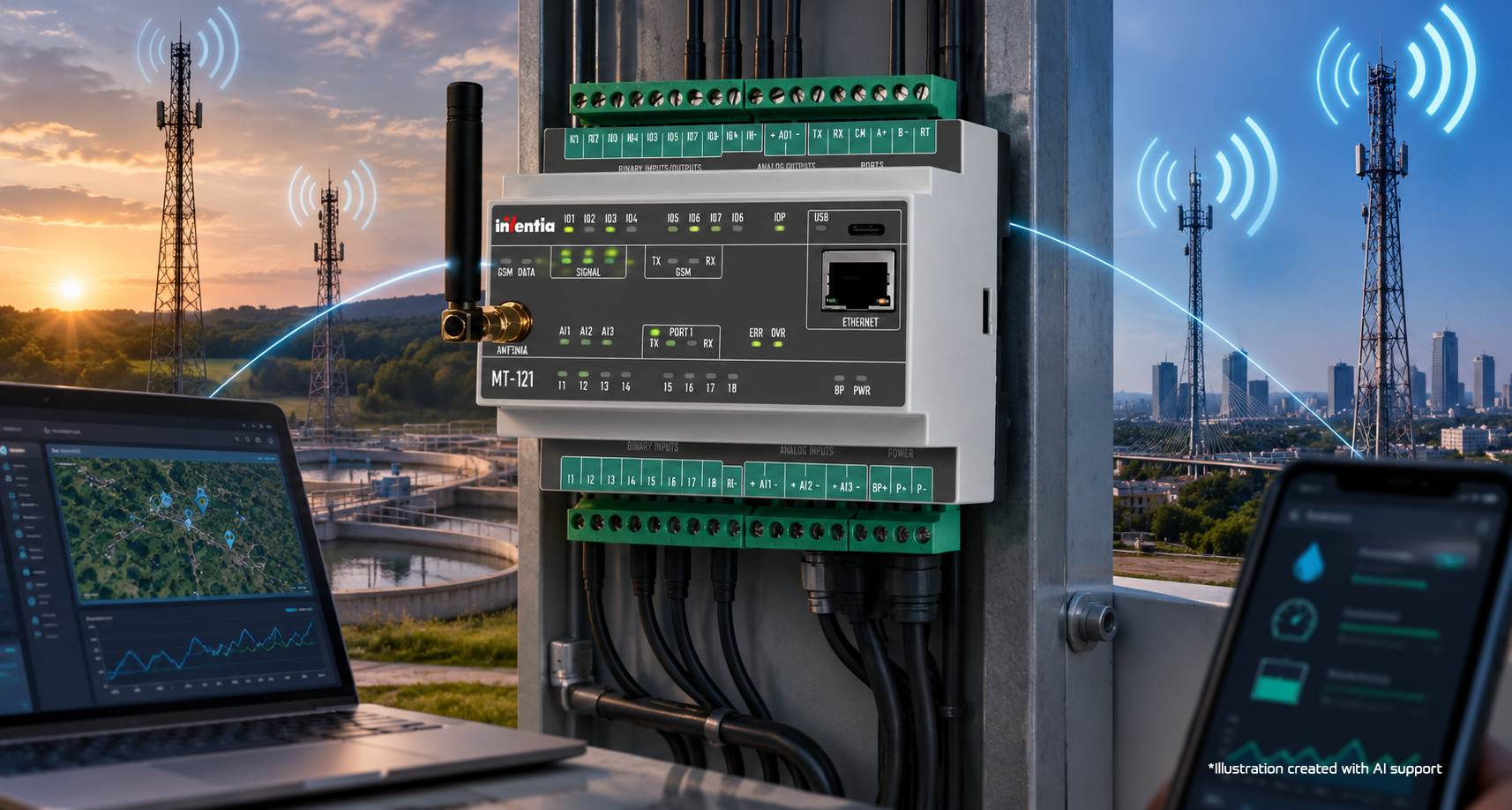
How can energy consumption be reduced and device operating time extended?
Another important aspect is energy consumption. IoT devices often run on batteries, and frequent data transmission over the GSM network quickly drains them. To ensure systems can operate reliably for longer periods, device sleep modes and reduced transmission frequencies are employed. Modern LTE-M and NB-IoT solutions feature PSM (Power Saving Mode) and eDRX, which allow for a significant extension of battery life. Furthermore, monitoring energy levels makes it possible to predict when devices need replacing or servicing before any system malfunctions occur.
Data security – telemetry must not only be accessible but also protected
The issue of security must not be overlooked either. GSM telemetry transmits sensitive data that must be protected against unauthorised access and tampering. Transmission encryption, data integrity verification and device authorisation are fundamental security measures. Regularly updating device firmware helps maintain system stability and data transmission security, ensuring reliable telemetry operation in all conditions.
Hundreds of devices, one system – how to manage a large installation?
In large installations, managing hundreds or even thousands of devices becomes a challenge. Each one must be monitored, configured and updated, which is difficult and costly without the right tools. Remote management systems, enabling OTA (Over-The-Air) updates and automatic diagnostic reports, significantly simplify the maintenance of the entire infrastructure. Centralised monitoring allows you to track the status of devices in real time and respond quickly to any faults.
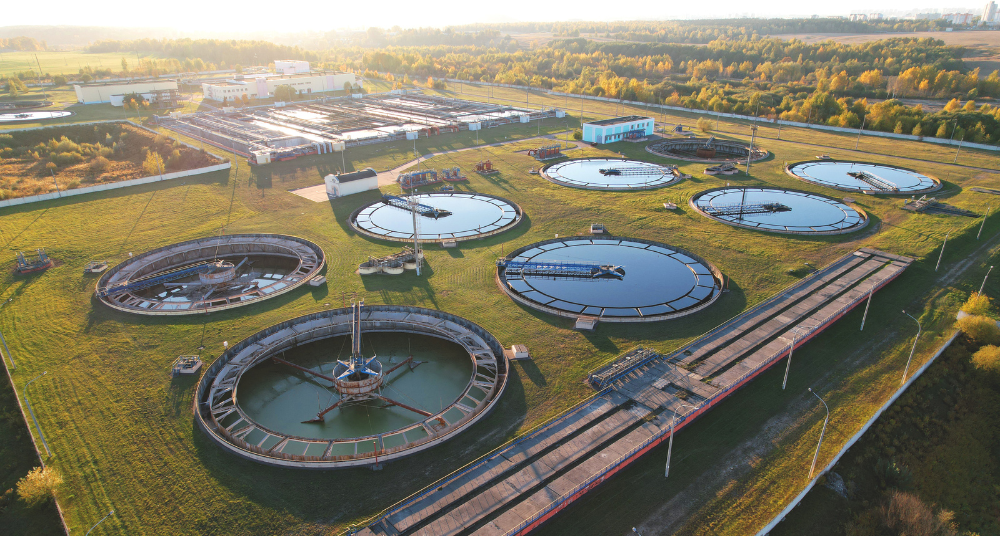
Transmission costs under control
Operating costs are an equally important consideration. Each SIM card incurs subscription and data transfer charges, which can add up to substantial sums in large-scale installations. In practice, this means optimising tariff choices, minimising data transmission and analysing expenditure in the context of the criticality of the monitored processes.
From pharmaceuticals to smart cities – where does GSM telemetry work in practice?
Despite these challenges, GSM telemetry enables a wide range of practical applications. In pharmaceutical warehouses, it allows for continuous monitoring of temperature and humidity, ensuring compliance with standards and enabling a rapid response to anomalies. In industry, GSM telemetry allows for the remote control of power generators and the receipt of fault alerts, whilst in urban metering systems it enables the remote reading of water, electricity and gas meters, eliminating the need for service visits.
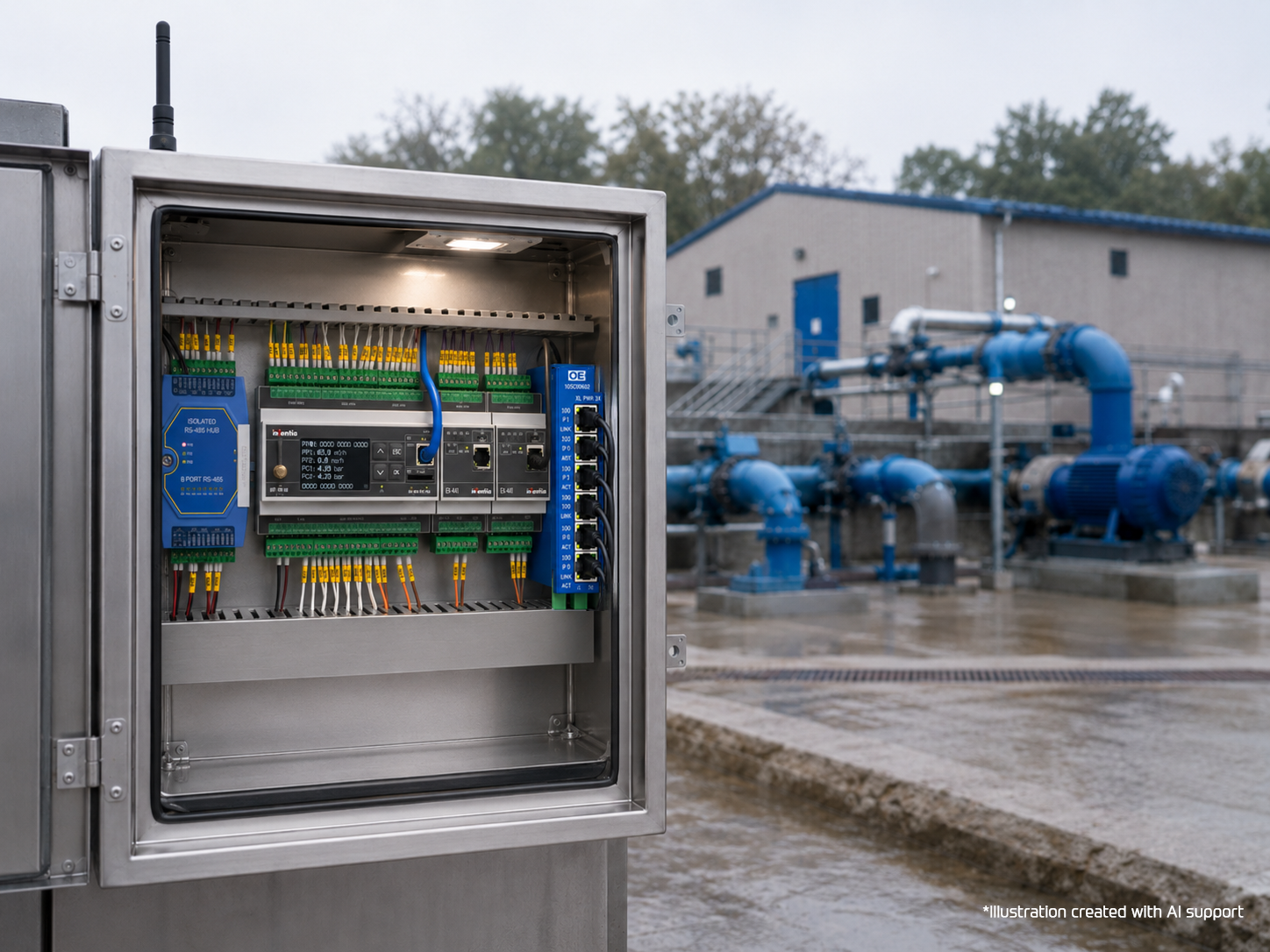
Reliable GSM telemetry is the result of many well-designed components
GSM telemetry enables fast, remote and flexible monitoring of devices and processes. However, its effectiveness depends on the correct selection of technology, securing data transmission, optimising energy consumption and continuously monitoring connection quality. By addressing key challenges – from coverage to security – it is possible to create a reliable system operating 24/7 that genuinely supports the business in its decision-making.
Would you like to use GSM telemetry in your business?
Would you like to find out how our GSM telemetry solutions work in practice?
Explore our range and discover the hardware and software that facilitate remote monitoring and control of equipment in your business.
Share this article:



Read more articles:
Telemetry also has its own life cycle. How can you tell if a water and sewerage system needs newer technology?
Find out how to tell if a water and sewerage telemetry system needs upgrading
Firmware updates – security, stability and new features
Find out why regular firmware updates improve the security and stability of your devices